
 УКР
УКР  POL
POL 
Philosophy of food
Have you eaten? This is how the question “How are you?” sounds in Korea.
The history of this coincidence is not accidental: Korea, having survived famine and war in the previous century, at a time when the whole world was developing, survived and managed to become an “economic miracle.” But, having become a battleground for two influential ideologies, the people suffered considerable pain and loss, and one of the most difficult trials was famine. This is how the habit of asking not just “how are you?” but at least “have you eaten?” became established.
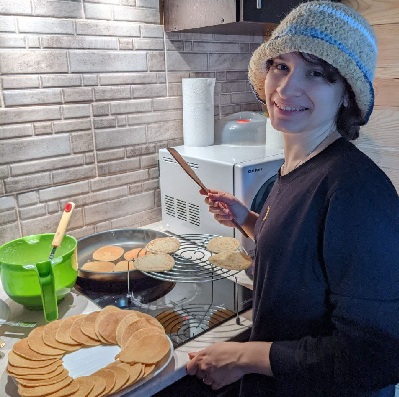
Why did I mention this? The topic of today's article is the philosophy of food and cooking. Why did I choose this topic? I think it's pretty obvious — I'm a cook. But for now, we're not just going to talk about tasty treats, but about the hidden fundamental principles that unite the universe, including the question of food. Sit back and enjoy.
Good and bad
So, food is our source of energy, it is also a lifeline when we are in a bad mood, it is a pleasant gift, it is a sign of attention, it is care, it is a profitable business, it is sometimes a weak spot for weak willpower, or it can even be someone's fear or burden. Food or cooking can be both an anticipated pleasant time and a heavy hellish burden.
To be honest, I have experienced both sides of food. My experience includes warm, positive memories of food or special meals, such as when I worked abroad and could buy my favorite candy bar almost every day instead of coffee, and it was a symbol of productive work, full commitment, effort, and reward for me. It was also a taste of independence, because I was far from home. Or what about the unbeatable taste of my mother's cheese dessert, which brings back memories of home, embracing me with its warmth, love, and care.
However, there was a time when food was also a source of suffering for me. When I had health problems, due to fear, my diet was reduced to a few “allowed” foods, and it was difficult for me to eat anywhere other than at home. Food became a burden, anxiety increased, and the usefulness of food decreased because there was no variety in the products. The problem of nutrition haunted me every day.
So why does food have such a big impact on us? Delving into philosophy, let's leave aside the materialistic view of the situation, where energy value and the balance of proteins, fats, carbohydrates, and micronutrients are important. I will not overwhelm you with nutritional advice or statistics to appear more knowledgeable, so let us settle on a general conclusion: it is necessary to eat a balanced and proper diet to obtain sufficient amounts of the necessary elements for the stable functioning of the body. After all, everyone needs to take care of their body.
We see that food has not only a physical impact on us, but also a psychological one. Our psychological state directly affects the absorption of nutrients, and “indigestion” of a situation can quite realistically result in physical digestive disorders. These two planes are as closely connected as the soul and the body, and the most important thing here is what is happening to me on an internal, invisible level.
What about the “meaning” of food? In addition to important factors such as energy value, there are also eating habits, taste preferences, and even allergies. This is largely related to the psyche, which brings us back to the realm of reflection on the soul — in other words, the inner aspect of a person. Of course, we cannot separate the soul and the body, but I will use these concepts conditionally to describe the internal/immaterial and external/material aspects of a person. So, let's move on to the issues of emotions and the “heart.”
Important to the heart
Traditions related to food preparation are passed down from generation to generation as religious, philosophical, and scientific knowledge. Depending on the country or people, individual lineages or territories, food traditions, national dishes, and ancestral recipes are all important components of human identity. When listing the objects that carry traditions, we must mention food. Mom's cooking. And for some reason, it is mom's signature dish, which her mother taught her, and so far back in time, that this taste is recognizable anywhere and anytime. I once saw a video where soldiers were brought food prepared (without their knowledge) by their mothers, and you know what? They started crying.
What made these strong adult men cry over pancakes or dumplings? Love. The love with which our mothers cooked for us day after day, year after year, using the most delicious homemade ingredients. So is food love? And is cooking a gift of love?
Have you ever heard the expression “delicious hands”? In cooking, it means that a chef can prepare a very tasty dish from the simplest ingredients, even using a minimum of ingredients and spices. It seems as if they add some secret ingredient, something like monosodium glutamate, but then it turns out that there are no special additives at all. It looks like forbidden magic, but somehow it works. As a cook, I was interested in this phenomenon, so I asked the professionals carefully — what is your secret? Such “cooking intuition” is not accidental. In addition to experience and ‘observation’ (not just experience, but quality experience from which conclusions can be drawn for improvement), an important element of the “taste of the hands” turned out to be a certain special attitude of the cooks. Diligence, care, attention to detail, and a desire to make something delicious all describe the essence of the “with love” approach.
When I started listening to our lectures, I heard about the concept of shimjeong for the first time. Later, I realized that this is the secret ingredient of perfect taste. In fact, drawing an analogy between the soul and the body, one can approach this question in a material way. There is an unwritten rule in Asian cuisine: for a dish to taste perfect, it must contain all flavors — sweet, sour, salty, bitter, and umami.
Umami, discovered by Japanese chemist Kikunae Ikeda in the last century, is the taste of a certain protein that is identified by specific taste receptors on the tongue and is simply described as “delicious.” It is naturally most abundant in heat-treated chicken, mushrooms, tomatoes, and fermented soybeans, and its synthetically derived chemical compound is called “monosodium glutamate” and is actively used in the food industry to enhance the taste of food, which is why food at McDonald's seems so delicious to us.
So why do we need all five taste characteristics? It is so that all our taste buds are activated and send a signal to the brain that this is a multifaceted dish. But there is still a deeper secret: even delicious ingredients and the preservation of the subtleties of technological processes can only result in a tasty dish, or they can result in a dish that makes your heart flutter. Therefore, my conclusion was very, very simple — you have to cook with your heart, that is, with shimjeong.
The secret to perfection
So, what are the other secret formulas for success in taste? A dish becomes complex and interesting when complementary opposites are present. Sweet and salty, crunchy and soft, hot and cold — these are combinations of different elements that create a harmonious whole, just as the universe consists of Yang (yangson) and Yin (yinson). These elements are opposites and are found in everything in the world of creation — man-woman, pistil-stigma, positively and negatively charged ions or particles. They are opposites, but when they unite, they complement each other and create a new element of creation. This explains why a dish such as fondant — a warm, bitter cake with cold vanilla ice cream — seems so perfect. It is interesting how the philosophical concepts of Confucianism from the Book of Changes can be traced in an ordinary dessert. Perhaps there is something secret and true in those sacred writings after all.
The next secret is internal and external. Everything in the world has internal qualities and external form. As we mentioned earlier, humans have a soul and a body — two aspects of a single organism. Similarly, positive (yin) and negative (yang) ions combine to form molecules of a substance because within each of them there is an internal aspect that directs them toward this goal. The same is true for plants — a grain sprout develops according to a certain principle, the “prescribed code” of the plant, and this is its internal aspect.
So what is the “internal code” of the perfect dish? As mentioned above, the subject should undoubtedly be the taste of the dish, not an Instagram-worthy picture or form. The appearance of food is important, but it is worthless without perfect taste and nutritional properties. We must strive to ensure that the internal quality (taste) matches the external form (presentation).
And the last secret to the most delicious dish in the world is to eat it with someone you love. Forget all the high standards of professional cuisine, technical requirements, and showmanship — remember the taste of wild blueberries or porridge in a pot that you ate with friends during a hike in the Carpathians, or the taste of freshly caught fish roasted on a fire in Crimea. When you laughed together, reminisced about warm moments, built dreams and plans, and life seemed completely in your hands. Or the time when the whole family finally gets together. If you ignore possible table conflicts, remember the warm family conversations, the unity of generations at the big table. The taste of those gatherings is sweeter than honey, because we, as humans, need meaning and things that are greater than just physical food.
So, as promised, we talked not only about food, but also about philosophy. I don't know what else to add, and whether it's worth doing so after such a profound conclusion. I wish you to find and build these meanings, and not only to cook or eat with love, but also to live with love. As your heart grows, life will become more and more interesting and fulfilling, so don't waste time on fleeting images and seek the meaning of this short life. Thank you.

