УКР
УКР  POL
POL 
Fate, destiny, and freedom of choice: is everything predetermined?
A fate without freedom becomes a sentence. Freedom without meaning becomes chaos.
The question of fate is one that humanity has never left alone. Is there a pre-written script for our lives? Are we the performers of someone else's plan? Why does the concept of “fate” even exist? Or, conversely, are we the architects of our own reality, who mistakenly call patterns “fate”?
This question lies at the intersection of philosophy, psychology, and personal existential experience. Interestingly, none of these fields provides a simple answer.
Contents
- Where does fate come from?
- Mysteries from the past
- Humanity in search
- Psychology: between script and freedom
- Everything began before us
- Destiny, but what kind?
- Where are we going?
- Does happiness have a form?
- So is free will not a choice, but a responsibility?
- So, is everything predetermined?
Where does fate come from?
Have you ever asked yourself questions about life? About why certain personalities are born into certain families, about why there is a concept of a “soul mate,” or about why you feel that a certain person, for reasons unknown, is very special to you?
Why do some people get sick and die young, and why do their loved ones have to endure this loss? At the same time, why do some people almost lose their lives but continue to live?
Disasters, heart attacks, “accidental” encounters, fatal acquaintances... We would like someone never to appear in our lives, or, conversely, for that someone to be with us in “thousands of future lives”...

Many things do not depend on human will, although...
It is safe to say that we do not know much about the past, our ancestors, and the origin of the universe, and even if we find out, will anyone believe it? With the rapid development of the Internet, it would seem that it is possible to reveal and shout the truth to the whole world, but even this article will quickly drown in the chaos of fast dopamine, unnecessary purchases, food, gossip, and scams.
But if you happen to read this, and not by accident (because for some reason you stopped at the word “fate”), then all is not lost. You will ask yourself questions, think about the meaning, and maybe even find some answers — then I will consider that I wrote for a reason.
So, sit back and let's talk about life and fate.
Mysteries from the past
Even if the above questions are new to you, they have been familiar to humanity for thousands of years. As we have already mentioned, history carries these interesting questions from everyday life — about déjà vu, experiences of memories from “past lives,” reincarnation, and in-yun.
-
In-Yun is a Korean concept that means “fate” or “connection,” especially in the context of relationships between people. It symbolizes the belief that encounters, even brief ones, are predetermined by past lives. The concept gained popularity thanks to the film Past Lives, where it is described as the right to create one's own destiny, without being limited by prejudice.

These questions are not accidental, because humanity is trying to explain mysterious coincidences and patterns. Books are written and films are made about this, and the most intriguing thing is that these are not fictional stories, but attempts to explain what we see but are not yet able to comprehend.
Humanity in search
In classical philosophy, the idea of fate was often associated with destiny — a force that stands above man. The Stoics believed that the world is subject to Logos, a rational order, and that human freedom lies not in changing events, but in one's attitude towards them. Therefore, in Stoicism, fate is not a chaotic verdict, but a field of possibilities.
Contemporary philosophy says something slightly different. Existentialists, notably Jean-Paul Sartre, radically rejected the idea of a predetermined destiny: “existence precedes essence.” Humans are not born with a predetermined mission — they shape it through their choices.
Despite the compelling arguments of both camps, deep down inside, everyone still has a glimmer of hope that “life led me to this point” or “we were meant to meet.” My favorite films on this topic are Arrival, Cloud Atlas, and The Butterfly Effect.

Psychology: between script and freedom
Psychology adds a bit of sobriety to the conversation. Erik Erikson described life as a series of psychosocial crises, each of which requires an active choice. There is no guarantee that a person will pass each stage “correctly” — but this is precisely what identity formation is all about.
In Eric Berne's transactional analysis, the concept of a life script appears — an unconscious plan formed in childhood. At first glance, this sounds like confirmation of fatalism: we live according to a program. But the key point is different — the script can be realized and rewritten. Awareness here becomes a point of freedom.
Carl Jung went even further, introducing the idea of individuation. A person's purpose is not to fulfill an external role, but to become themselves. Jung did not deny archetypes and the collective unconscious, but believed that the meaning of life is revealed through an inner journey, not through external success.
Viktor Frankl, drawing on his experience in concentration camps, offered a different perspective: the meaning of life is not invented or imposed — it is revealed in response to specific circumstances. A person does not ask life, “What is my purpose?” On the contrary, life asks a person, “Who are you?” And a person must answer with their own actions.
This approach breaks down the limitations of the “everything is determined/nothing is determined” choice. There are conditions that we do not choose: time, body, historical context. But within these conditions, there is always room for responsibility.
Everything started before us

In fact, I think it's all quite simple. Even the concept of reincarnation may not seem so mystical. After all, each of us (and our lives, determined by the past) is a logical continuation of various lineages and ancestors, and we are forced to repeat their mistakes and victories. It is written in our DNA, in our facial features, in our physique, character, speech style, upbringing, and, in general, in 99% of each of our lives. Because everything we have and everything we are made of is a legacy of the past. I would call this fate. We often repeat our parents' life path, and whether we want it or not, we take both the good and the bad from them.
However, that mysterious 1% is freedom of will, of choice. For example, when a son chooses not to repeat the fate of his father, who suffered from alcoholism. Or when a daughter chooses to work through her traumas and forgive her mother's insults. This is what clearly reflects the existence of self-awareness, which we undoubtedly see but cannot explain the origin of. Science struggles to find the source of self-awareness, running into the “hard problem of consciousness,” while religion explains it simply by the existence of a Higher Consciousness, a source called God.
One way or another, there must be an explanation for this, and, as life shows, we can indeed change ourselves so as not to fall into the trap of past mistakes. Paradoxically, the definite and the indefinite can be combined; the main thing is to find a point of contact. In the meantime, let's continue our research.
Destiny, but what kind?
We talk so much about how human history follows predictable patterns, repeating the past until we repeat the mistakes of our ancestors, but what exactly does that repetition look like? What answer or action would be “right”? If we try to fix a mistake, change our behavior so that the result is different, what result are we expecting? What is the final destination we are moving towards? Where is fate leading us?
This question takes us to a new level of philosophical reflection on the purpose of the creation of the universe and causes our soul fibers to sway more chaotically, because the questions of the meaning of life and Being seem like questions to which we will never receive answers. This is a little scary, but if we approach all philosophical questions with patience, we can avoid anxiety. Moreover, let's look at this question from a new angle and try to find at least a few unknowns in this equation.
Let's start with the principle of similarity and the concept of fundamental principles of life.
Where are we going?
Where does fate lead us? Why did we “have” to meet this or that person who radically changed our lives? If we are moving toward a certain result, we must clearly (or at least vaguely) understand what that result looks like. So where is humanity headed?
By nature, people want to be happy. From minor episodes in the lives of individuals to events of historical significance, everything is essentially a manifestation of the human desire to become happier.
What makes us happy? What is the point of eternal and unchanging happiness? Undoubtedly, the concept of “happiness” arises as an individual subjective experience. In simple terms, happiness is not caused by an external stimulus, but by an internal reaction to a stimulus. Therefore, the question of happiness lies in the realm of internal experiences, which greatly complicates scientific research. In contrast to this, new approaches are emerging, where scientists and religious leaders are joining forces in search of answers. I recommend reading the book Buddha, the Brain, and the Neuroscience of Happiness, written by a scientist and a Buddhist monk.
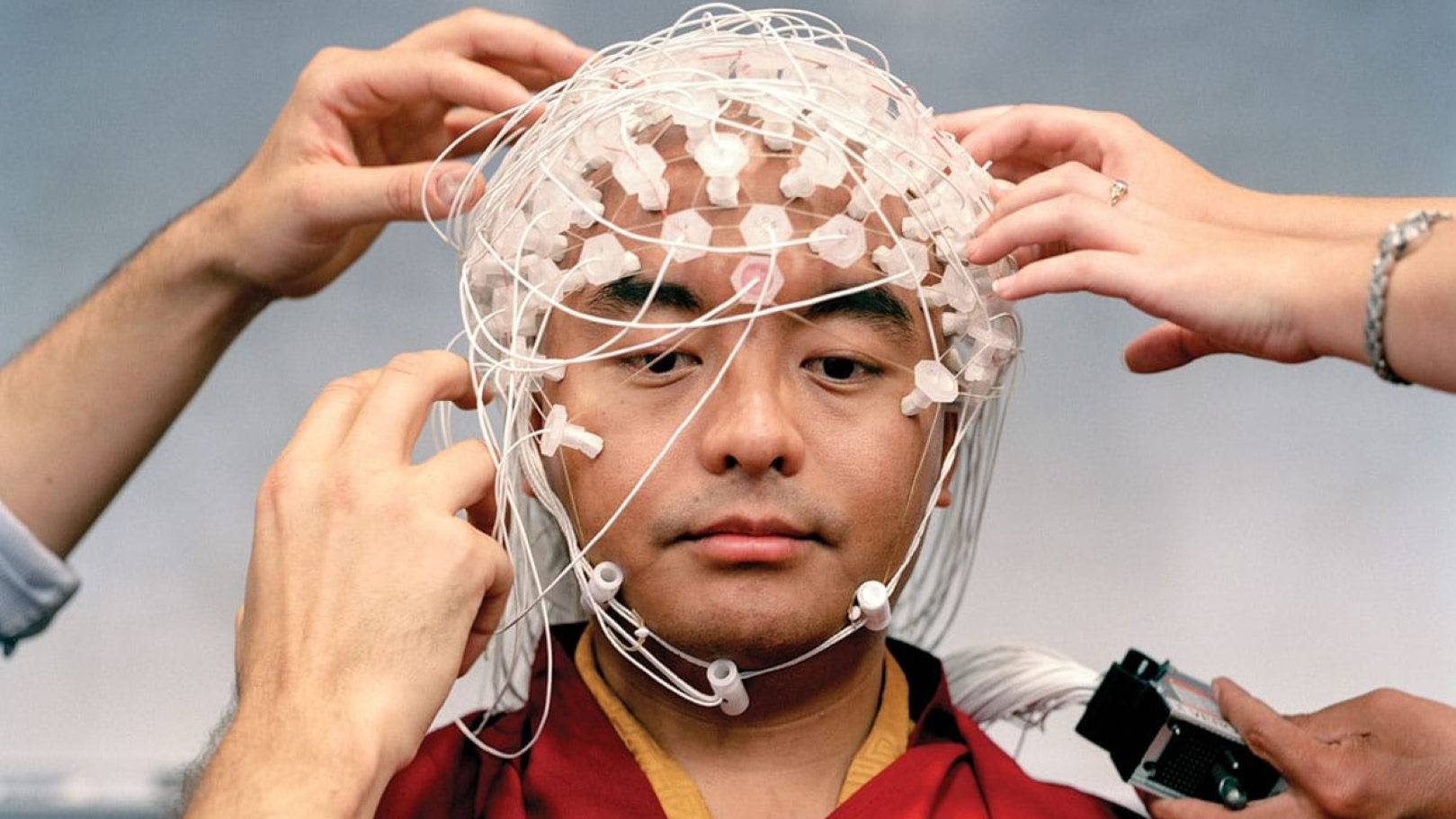
Okay, we've figured out that the root of happiness lies within us, but it's still unclear what this inner self should look like and how to “mold” it...
Does happiness have a shape?
Does happiness have a form? What is it like, what kind of life can be called happy? What feelings shape the experience of happiness from the years lived? What should I do to feel the full potential of happiness?
There is a good study that lasted 75 years, and the conclusions were very simple — the most valuable and happiest moments in life are associated with relationships and the level of trusting, strong, long-lasting relationships.
What Makes a Good Life? Lessons from the Longest Study on Happiness | Robert Waldinger | TED
So it turns out that we have to find a way to build our ideal selves, ideal relationships, and live ideally in our environment. The word “perfect” is mentioned too often, and for many it seems like a utopia — something unreal and unattainable. However, if it were unattainable, could we even dream about it? If we see at least a glimmer of the word “perfect” on the horizon, then it must exist somewhere. To build a life that we will not be ashamed of, that we will not regret, and that we can say with a clear conscience: I did everything in my power and put my whole heart into it — that is probably what a happy life sounds like.

So freedom of will is not a choice, but a responsibility?
Do we have a choice: to live a happy or unhappy life — when, perhaps, fate, stretching from the past, has prepared difficulties for us? Difficulties that we can live through with dignity if we understand how to react, how to behave, according to a certain standard of a principled person? Perhaps there are not so many options for how to live through difficulties, how to behave honestly, sincerely, conscientiously? Perhaps somewhere there is a standard of a devoted, loving heart with which we can feel comfort during pain, relief from injuries, and atonement for mistakes? Perhaps at least one person has discovered the standard of inner happiness?
We gather bits and pieces of who we would like to be: the healthiest reactions, the most sincere smiles, the deepest conversations, the most logical thoughts. That standard definitely exists somewhere, like the acceleration formula or Pythagoras' theorem. The question is, when will we fully discover it? And when will we implement it? Because until we discover this standard, happiness will be a random choice, and after its discovery — an inevitable responsibility.
So, is everything predetermined?
Fate is not a rigid scenario, but a field of possibilities where conditions are constant, but there are options for responses. Destiny is not an order from above, but a direction that gradually manifests itself through experience, mistakes, choices, and inner honesty. A direction toward a point that is clearly defined for some and blurred for others, but nevertheless real. It exists like gravity, like Archimedes' law, like all the principles that make up the universe. Principles that exist regardless of whether we know them or not, regardless of whether they have been discovered or not, and regardless of whether we agree with them or not. They exist, and all we have to do is embody them.